A variety of different battery types are used in emergency lighting. The main types are: Lead-acid batteries,NiCd batteries,NiMh batteries,Lithium-ion Batteries, Lifepo4 batteries.
A variety of different battery types are used in emergency lighting. The main types are:
Lead-acid batteries: These were commonly used till recently in self-contained emergency lighting fixtures, such as a twinspot, and are still widely used in central battery systems. Outside these specific applications, lead acid batteries are now rarely used in emergency lighting.
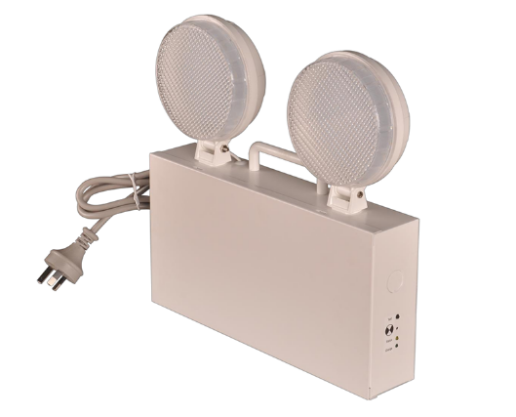
A twinspot emergency light fitting. Till recently, most of these used sealed lead acid batteries, but other chemistries are now being used.
Nickel-cadmium (NiCd) batteries are prevalent in stand-alone emergency lighting fixtures and emergency conversion kits. Despite cadmium being highly toxic and among the six substances prohibited by the EU's RoHS Directive, an exemption exists for emergency lighting batteries. Until recently, there have been limited viable alternatives, hence the continued use of NiCd batteries in this context.

A stand-alone emergency exit sign. Most of these use nickel cadmium (NiCd) batteries, located inside the fitting.
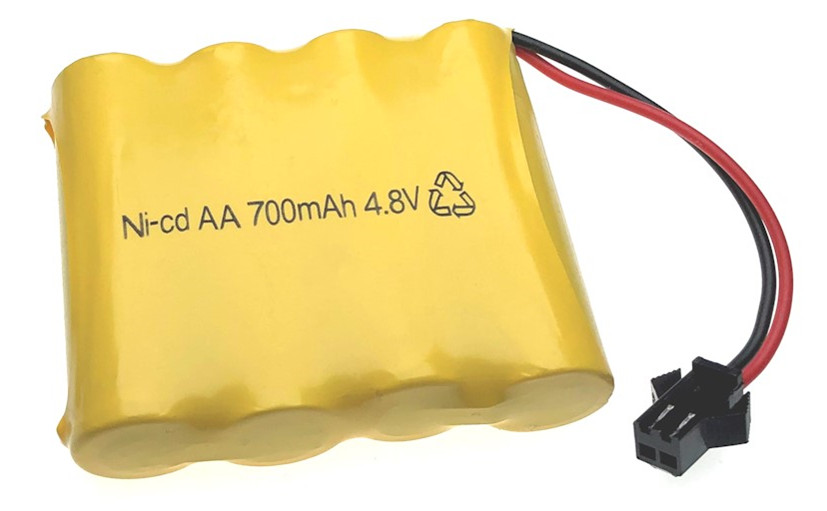
Examples of NiCd batteries, as would be used in a conversion kit, used to turn a standard light fitting into an emergency light fitting. Each battery in these examples consists of 2, 3 or 4 cells.
NiMH batteries are extensively utilized as substitutes for NiCd batteries in emergency conversion kits. They offer slight advantages in certain applications within this context.
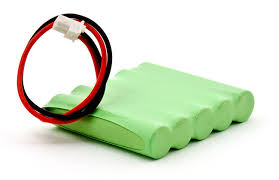
A NiMH battery consisting, in this example, of 5 cells. Visually, the main difference is that NiMH cells are slimmer than NiCd cells. Lifecycles: 500+
Li-ion Batteries: 3.7V single battery cell; easy to configure into various series and parallel battery packs; suitable for portable emergency lights. Lifecycles: 800+
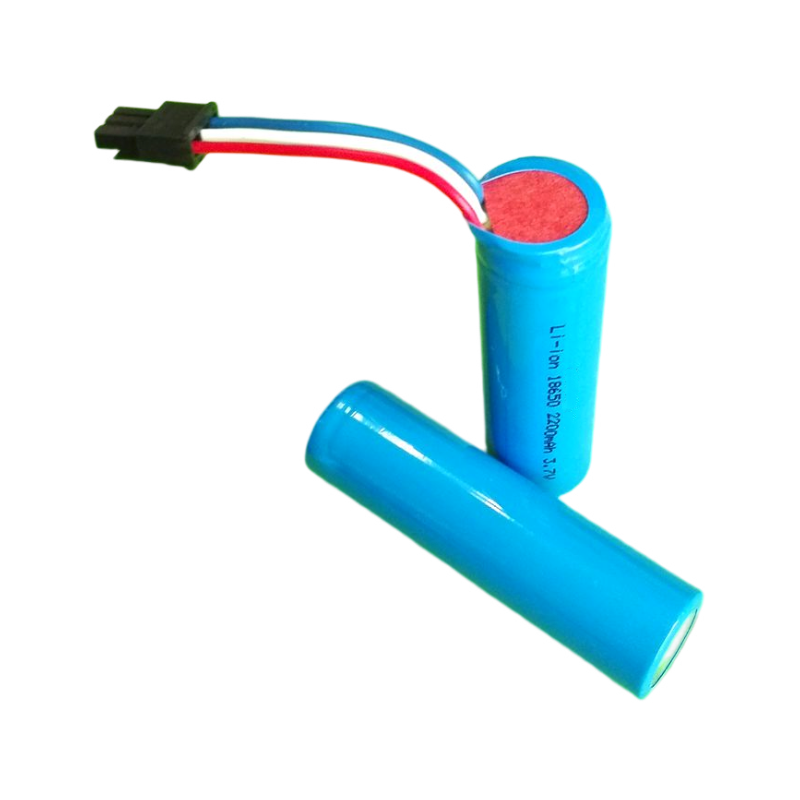
LiFepo4 batteries, available in various types, are increasingly popular for emergency lighting due to their numerous advantages over lead acid, NiCd, and NiMH batteries. As a result, their usage is rapidly expanding in this field. Lifecycles: 6000+.
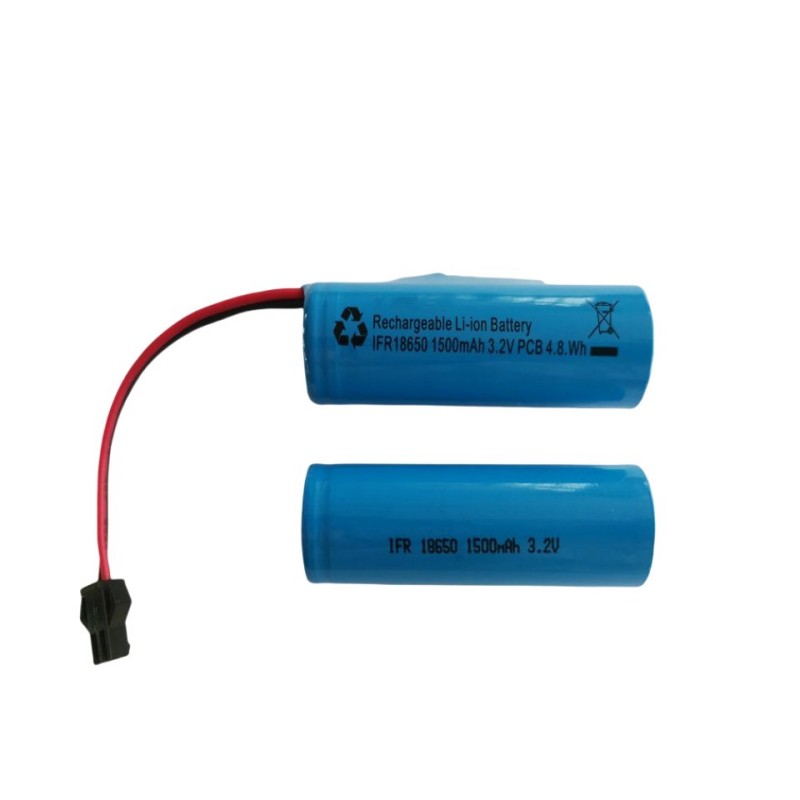
Are lithium iron phosphate (LFP) batteries suitable for emergency lighting?
Lithium iron phosphate (LiFePO4, or LFP) are very well suited for use in emergency lighting. When compared with alternatives such as nickel cadmium (NiCd) and nickel metal hydride (NiMH), lithium iron phosphate (LFP) batteries have several advantages:
1).Energy efficiency. LFP is more efficient than NiCd in two ways.
2).Self-discharge rates vary among rechargeable batteries. For LFP (Lithium Iron Phosphate) batteries, the discharge rate is only 3-5% per month, whereas NiCd (Nickel Cadmium) batteries can lose up to 20% per month thereafter (depending on temperature). Consequently, the charger in an emergency fixture equipped with NiCd or NiMH (Nickel Metal Hydride) batteries operates almost constantly, whereas in an LFP circuit, the charger works intermittently at low current.
3). Charge efficiency. Regarding charge efficiency, all batteries experience energy loss as heat during charging. LFP batteries exhibit very high charge efficiency at around 95%. In contrast, NiCd batteries demonstrate high charge efficiency primarily in the early stages of charging. However, once the NiCd battery reaches 70% capacity, it generates heat, causing charging efficiency to drop to approximately 85%. This discrepancy is noteworthy because under normal usage, a NiCd battery in an emergency light fixture undergoes continual trickle-charging to maintain it close to 100% capacity.
4).Long lifecycles
Lifepo4 batteries exhibit minimal memory effect, ensuring their performance remains nearly constant until they reach their end of life, typically defined as 70% of their rated capacity. Generally, an LFP battery maintains a lifespan of 8-10 years.
In contrast, both NiCd and NiMH batteries experience rapid declines in performance (power storage) with each charge/discharge cycle. As a result, they usually require replacement after 3 or 4 years. The mandatory routine testing of emergency lighting as per BS 5266 contributes to the shorter lifespan of NiCd batteries. Additionally, NiCd batteries in new construction projects often fail within the first year if they've been fully installed during the construction phase when mains power is typically completely switched off overnight. The nightly discharge and subsequent daily recharge significantly degrade NiCd batteries, potentially necessitating replacement within the initial year of use.
5).Extreme temperature performance.
High Temperatures: LFP batteries remain unaffected by ambient temperatures up to 60ºC, whereas NiCd and NiMH can only withstand 55ºC and 50ºC, respectively.
Low Temperatures: LFP batteries, NiCd and NiMH performs reliably down to -20ºC.
6).Environmental Impact: Cadmium, banned under the RoHS Directive due to its hazardous nature, is highly toxic to almost all animals and many plants. It persists in the environment as it does not readily combine with other elements to become harmless. Proper recycling with meticulous care is necessary for NiCd batteries. While LFP batteries also require recycling, the materials used are inherently less harmful than those in NiCd and NiMH batteries.
7).Cadmium has a limited future use. Now that superior alternatives to cadmium are available for use in batteries it is to be expected that the RoHS directive will be amended to eliminate the exemption that has been allowed till now (2020).
8).Lithium has a long future ahead. Lithium iron phosphate in particular is favoured for its safety, economy and efficiency and is being increasingly used in many applications, such as vehicles, in addition to emergency lighting.
What are the costs of using lithium iron phosphate (LFP) batteries in emergency lighting?
Lithium iron phosphate is very cost effective as the power source in emergency lighting when compared with alternatives such as NiCd. This applies to its acquisition costs, running costs and maintenance costs.
1).Acquisition costs. Over 4+ years the acquisition costs of lithium iron phosphate (LFP) batteries for emergency lighting are lower than the cost of NiCd batteries. Compared on the basis of capacity (Ah), LFP batteries are more expensive than NiCd. However, because the performance of NiCd batteries declines relatively steeply through their life, more of them are required to deliver the expected 3 hours duration after 4 years use. Further, LFP batteries can be expected to last about twice as long as their NiCd equivalents, so over a period of 4 or more years the acquisition costs of LFP are lower than NiCd.
2).Running costs. Lithium iron phosphate (LFP) batteries are the most economical batteries to run for emergency lighting. This is because the main alternative, NiCd batteries, have a high self-discharge rate (c. 20% per month) so have to be constantly charged in order to be ready in case of a power cut. In contrast, the much lower self-discharge rate for LFP means that the charger is only used in short bursts once in every one or two months. Based on tests performed using a commercially available emergency bulkhead fitting (pictured) with NiCd and LFP batteries the following power consumption data was recorded:
In summary, the power savings that result from using LFP rather than NiCd in popular emergency light fittings are >40%.
In financial terms, assuming an electricity price of £0.145 per kWh, the annual saving per emergency light fitting is £2.25.
3).Maintenance costs. Lithium iron phosphate (LFP) has lower maintenance costs than the alternatives such as NiCd. This is because the design life of the NiCd batteries used in emergency lighting is typically just 4 years. The expected life of the comparable LFP batteries is 8-10 years, so the maintenance costs are only 50% or less than those of NiCd.
Frequently Asked Questions (FAQ)
1): How often should an emergency light battery be replaced?
A LiFePO4 emergency light battery typically has a lifespan of 8-10 years, significantly longer than NiCd or SLA batteries, which usually need replacing every 3-5 years. However, replacement should be based on annual testing results. If a battery for emergency light systems fails its 90-minute discharge test, it must be replaced immediately, regardless of its age.
2): Can I upgrade my old emergency lights to a LiFePO4 battery?
In many cases, yes. Retrofit kits are available to upgrade existing fixtures with a modern LiFePO4 battery backup emergency light system. This is a cost-effective way to enhance the safety and reliability of your building's emergency lighting without replacing the entire fixture. It is best to consult with a qualified professional to ensure compatibility.
3): Is a LiFePO4 emergency light battery more expensive?
While the initial purchase price of a LiFePO4 emergency light battery may be slightly higher than older technologies, its total cost of ownership is much lower. The extended lifespan means fewer replacements, leading to significant savings on both battery costs and the labor required for installation over the long term. The superior reliability of this battery for emergency light use also reduces maintenance needs.
4):What happens if a battery backup emergency light fails?
A failed battery backup emergency light will not activate during a power outage, creating a serious safety hazard. It can lead to non-compliance with fire and building codes, resulting in fines or legal liability. This is why regular testing and using a reliable power source, like a LiFePO4 emergency light battery, is so critical.
5): What is the "memory effect" in NiCd batteries?
The memory effect, common in NiCd batteries, occurs when a battery is repeatedly recharged before it is fully depleted. This can cause the battery to "remember" the shorter cycle and reduce its effective capacity. LiFePO4 batteries do not suffer from the memory effect, ensuring they can deliver their full capacity throughout their entire service life, making them a more reliable battery for emergency light applications.
If you want to know more battery solutions for Emergency Lighting, please visit: https://ibornbattery.com/collections/emergency-lighting-batteries.

